





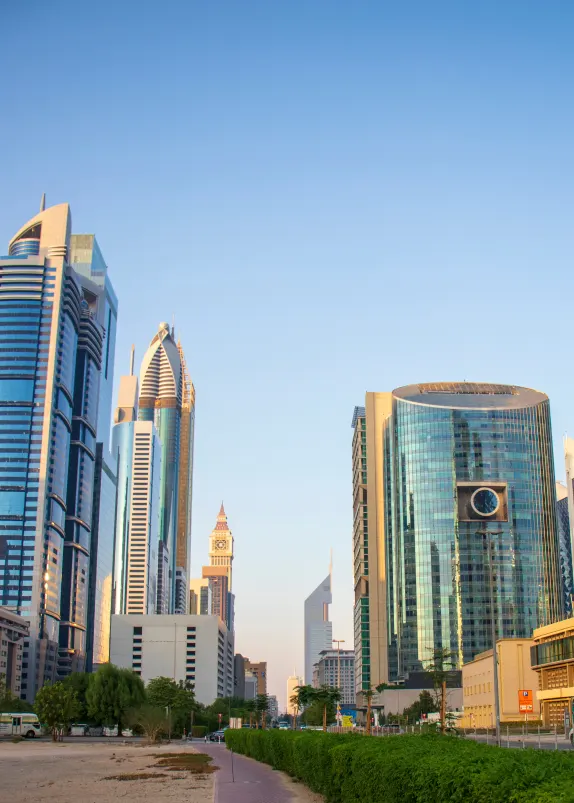

If you have dreams in your eyes of starting out your retail business in the UAE, you’re not alone in this journey, but you’ll find many dreamers who think like that!
You can better understand this by looking at its growing speed. The UAE retail market reached 145.3 billion dollars in 2024. The best part? It is projected to grow to 227.1 billion dollars by 2033. This makes it one of the fastest-growing retail economies in the Middle East.
Picture this: a foreign entrepreneur lands in Dubai for a business trip. Within a few days, they see luxury malls packed with tourists, neighborhood supermarkets serving growing communities, and social media brands selling thousands of products without a physical storefront. The opportunity is obvious. But so are the questions!
What exactly is a retail business? Which retail models are actually thriving in the UAE? How much does it cost to start? And what mistakes should investors avoid?
This guide answers those questions with a practical focus on today’s UAE market. You’ll learn the:
- Definition of retail
- Explore the most profitable retail business types
- Understand setup costs
- Discover how to enter the world’s most attractive retail sector.
What a Retail Business is: How It Works
Retail Business Meaning:
It refers to selling products directly to end consumers for personal use. In the supply chain, goods move from manufacturer → wholesaler → retailer → customer.
The core retail model is simple: retailers buy products in bulk, sell them individually, and earn profit through markups and margins.
Unlike wholesale businesses that sell large quantities to other businesses, retailers serve individual consumers.
The retail meaning in business extends today beyond physical stores. Modern retailers operate through:
- Storefronts
- E-commerce websites
- Mobile apps
- Social commerce channels
They can operate from everywhere simultaneously.
Retail vs. Wholesale: What’s the Difference?
The difference between the two is a must to understand before starting out:
Retail vs wholesale UAE
- Retail sells directly to consumers; wholesale sells to businesses.
- Retail transactions are smaller; wholesale orders are larger.
- Retail earns higher margins per item; wholesale depends on volume.
- UAE licensing requirements differ depending on whether you’re selling to consumers or other businesses.
UAE Retail Market Overview: Why It’s Becoming the Most Attractive Worldwide?
The UAE retail market keeps attracting global investors. Why? This usually happens because of its strong consumer spending. You can count on its strategic location, tourism industry, and business-friendly regulations that have become a magnet for international investors.
Key market indicators include:
| Key Market Indicator | Value / Insight |
| Market Value in 2024 | USD 145.3 Billion |
| Forecast Market Value in 2033 | USD 227.1 Billion |
| CAGR 2024 to 2033 | 5.1 percent |
| Contribution to UAE GDP | Approximately 12.7 percent |
| Employment Supported | More than 250,000 jobs |
| Share of Retail Sales from Tourists | Nearly 20 percent |
| International Visitors to Dubai in 2023 | 14.9 Million |
| UAE E-commerce Market Size in 2025 | Exceeded USD 27 Billion |
| E-commerce Annual Growth Rate | Approximately 23 percent |
If you’re an investor evaluating a retail business Dubai opportunity, these numbers highlight one thing: demand is growing in both physical and digital channels.
Who Is Shopping in the UAE?
Not who is shopping, but who makes the most contribution is actually the question that should be asked. Find out who puts their share in the most.
Emirati Nationals:
Emirati consumers have high purchasing power. They have a strong demand for premium products. Prefers to use luxury brands, electronics, and personalized shopping experiences.
Expatriates:
Expats make up the largest share of the UAE population. Their spending habits vary widely. This creates opportunities across mid-market and premium retail categories.
Tourists:
They remain the biggest drivers of retail spending. Visitors frequently purchase luxury goods. They’re greatly fond of fashion, beauty products, jewelry, electronics, and gifts. It creates a huge demand in major retail destinations.
The UAE consumer behavior retail trend is essential to understand. Right before selecting a product category or store location.
Kinds of Retail Business in the UAE:
The choice to select the right retail model can influence many factors. Your profitability, scalability, and startup costs are directly linked to it.
Physical – Brick-and-Mortar Retail
Physical retail includes department stores, supermarkets, luxury boutiques, and specialty stores.
Modern-day UAE stores are becoming experience centers. Instead of simple sales outlets. Retailers today use:
- AR fitting rooms
- Interactive displays
- In-store events
- Personalized experiences
Their main motive is to attract customers. The model suits entrepreneurs targeting local communities or premium shoppers willing to visit stores.
E-Commerce & Online Retail:
Online retail comes under the fastest-growing segment in the UAE. Noon, Amazon.AE and Namshi are the major platforms.
UAE e-commerce surpasses USD 27 billion in 2025. This pushes many entrepreneurs to launch digital-first businesses through free zones, which are specifically designed for online commerce. The model requires lower startup costs and offers easier scalability.
Omnichannel Retail:
It combines physical stores, websites, mobile applications, and social media platforms into one seamless customer experience. Omnichannel today is becoming the standard. Not a competitive advantage. Its examples include click-and-collect services, loyalty mobile apps, self-service kiosks, and unified inventory management.
Research indicates that:
“78% of UAE consumers discover brands through social media.”
Makes cross-channel engagement very important.
Social Commerce:
The time has gone when Instagram and TikTok were considered marketing platforms. Now, call them direct sales channels. Many UAE consumers discover, evaluate, and purchase products immediately without leaving social media apps.
Retailers can reap these new opportunities. Meanwhile, they require stronger inventory management with faster fulfillment. An integrated customer service must also be in place.
Mainland vs. Free Zone:
Wondering which setup will be the best for your retail business? We’ll help you figure it out here!
Mainland Retail Setup:
These companies are required for businesses operating physical stores in:
- Malls
- High streets
- Public retail locations.
You can start operating your mainland retail business by obtaining a commercial license issued by DET – Dubai Economy and Tourism. The license cost you need to pay is 24,500 dirhams. Here, you get a chance to have full foreign ownership available for most activities. However, physical tenancy and Ejari registration are generally required.
This setup is best suited for restaurants, grocery stores, fashion boutiques, and specialty retail stores.
Free Zone Retail Setup:
They are designed for online retail, import-export operations, and e-commerce businesses. The free zone set up gives you full foreign ownership. The best part about it, you experience a faster setup process. As a freezone retail business owner, you gain tax benefits. Its license starts from 12,500 dirhams. IFZA, DMCC, Meydan, and JAFZA are the most popular free zones.
Beneficial and ideal for your E-commerce stores, online brands, and B2B trading companies, drop shipping businesses in UAE.
| Criteria | Mainland | Free Zone |
| Physical store allowed | Yes | No |
| Foreign ownership | 100 percent | 100 percent |
| Cost range | Higher | Lower |
| Best for | Retail stores | E-commerce |
| Setup time | One to four weeks | One to five days |
How You Can Start a Retail Business in the UAE:
The step-by-step approach is required to open up your retail business. We have listed all the steps for your help.
Step 1: Define your retail activity and target audience.
Step 2: Choose mainland or free zone jurisdiction.
Step 3: Reserve your trade name.
Step 4: Obtain initial approval.
Step 5: Secure commercial premises and register Ejari or flexi-desk.
Step 6: Apply for your commercial trade license.
Step 7: Obtain any required sector-specific permits.
Step 8: Open a corporate bank account and begin operations.
Important:
Pharmaceutical, medical, and food-related retail activities need approvals beyond the standard trade license. Food businesses are required to obtain clearance from the Food Control Department.
Costs of Opening a UAE Retail Business:
How much investment is needed to open a retail business must come first to mind, even before starting out.
Startup Costs
| Expense | Estimated Cost |
| Mainland license | 20,000–25,000 Dirhams |
| Free zone license | 12,500–18,000 Dirhams |
| Annual renewal | 80–90 percent of the license cost |
| Visa, insurance, PRO services | 15,000–40,000 Dirhams annually |
Retail space costs vary from case to case. Location decides the actual price.
A realistic first-year budget for a small physical store lies between 150,000 and 300,000 dirhams. Whereas an online retail operation costs you around 50,000 to 80,000 dirhams.
Many websites advertise startup costs of 22,000 dirhams. That figure, in reality, covers only the license. It doesn’t include:
- Inventory
- Rent
- Staffing
- Technology
- Operational expenses.
Challenges & Risks You Need to Know Before You Start:
Be a successful investor and evaluate risks before committing capital.
The challenges you often face include:
Intense Competition:
More than 144,000 retail establishments operate in the UAE. Creates fierce competition in many categories.
Rising Real Estate Costs:
Mall and premium retail rents remain among the highest worldwide.
Consumer Value-Seeking:
Modern consumers have become price-conscious since 2022. Still, their purchasing power remains strong.
Omnichannel Pressure:
Retailers without an online presence are losing market share to omnichannel competitors.
Saturation in Fashion & Beauty:
These categories remain attractive. However, they’re equally highly crowded. Clear differentiation is essential.
Regulatory Complexity:
Food, pharmaceutical, medical, and electronics retailers require extra sets of permits and approvals.
Conclusion
Being one of the most attractive retail markets in the Middle East, the UAE offers unlimited opportunities. You can choose between e-commerce, fashion, food and beverage, health products, electronics, and specialty retail. The sector has become promising for entrepreneurs in 2026. The growing population, strong consumer spending, advanced digital infrastructure, and business-friendly regulations are driving demand to new heights.
Starting a business in UAE is more accessible for newcomers. Before starting out, deep dive into thorough market research, identify a profitable niche, choose the right business structure, and secure the necessary licenses. Many entrepreneurs are also adopting online-first retail models. These models are best to reduce startup costs while reaching customers across the Emirates. To streamline operations and improve inventory, sales, and customer management, businesses can leverage advanced retail management solutions such as KPM PRO, helping them scale efficiently in the UAE’s competitive retail landscape.
FAQs
What’s the difference between a retail business and a trading business in the UAE?
Retail business:
This business sells directly to consumers.
Trading business:
It may import, export, distribute, or sell products to other businesses.
Can a foreigner fully own a retail business in the UAE?
Most mainland and all free zone retail activities permit full foreign ownership.
What’s the cheapest way to start a retail business in the UAE?
An e-commerce business can be established through a free zone. The free zone is best to start with, as it offers the lowest startup cost.
Do I need a separate license for each type of product I sell?
Certain regulated products may require collecting extra approvals or activity classifications.
What’s the duration to set up a retail business in the UAE?
Free zone companies can be established within a few days. Mainland setups, by contrast, take two to four weeks.
Is the retail business profitable in the UAE?
Retail business is a profitable sector, especially when supported by deep market research and positioning. Its strong consumer spending, tourism growth, and digital commerce make it worthy enough.
What’s the role of omnichannel in UAE retail today?
Omnichannel retail connects:
- Physical stores
- Websites
- Mobile apps
- Social media
Connecting them into one customer journey. It has become a key driver of customer engagement and sales growth in the UAE market.